
 Download App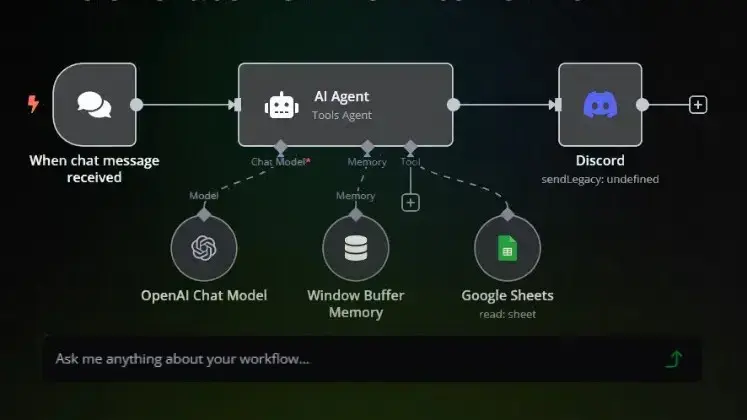
On August 28, during a live LinkedIn session, n8n’s CEO subtly revealed that the company is actively working on a Co-Pilot-like AI assistant—an AI-powered companion designed to help users build workflows using plain-language prompts.
What is n8n Co-Pilot?
Dubbed informally as n8n Co-Pilot, this assistant is intended to act as a native AI workflow builder, responding to natural language instructions to configure nodes and construct entire workflows seamlessly. It’s being positioned as "far better than Claude or ChatGPT" in its automation domain.
Though currently “under works,” this feature builds on community demand—many users have previously highlighted the need for built-in AI assistance, such as ChatGPT-powered debugging and workflow suggestions.
Why This Matters :
Reduces the Learning Curve – Many n8n users struggle with workflow logic and node configuration. A built-in AI assistant could make automation accessible for non-coders and newcomers.
Speeds Up Development – No more context switching or wrestling with documentation; users could build workflows directly in natural language.
Strengthens the AI Investment Thesis – n8n’s recent pivot toward AI-powered automation has been a success—its revenues increased fivefold, and it raised €55M in March.
(The said live from amsterdam from my viewpoint, captured as the event was beginning, sound checks were in place, person in the image is Adeline Amar, presently community manager at n8n )
How It Fits in Broader Trend :
The rise of n8n’s Co-Pilot isn’t happening in isolation—it’s part of a much larger movement in the automation and productivity space where AI is no longer an add-on, but the core driver of innovation. Over the past two years, platforms like Zapier (CoPilot), Microsoft (Copilot across Office and Azure), and even Google (Duet AI in Workspace) have embraced AI-driven assistants that help users automate tasks, generate insights, and reduce manual effort.
What makes n8n’s approach stand out is its open-source and fair-code DNA. While Zapier and Microsoft provide powerful AI copilots, they remain closed ecosystems—users rely on the vendor’s infrastructure, pricing, and limits. In contrast, n8n has built its reputation around being self-hostable, customizable, and developer-friendly, giving organizations more control over their data and workflows. Embedding a Co-Pilot into this model could be a game-changer for enterprises with strict compliance, privacy, and customization needs.
At a macro level, this reflects three big trends :
The Consumerization of AI in AutomationUsers increasingly expect to "talk" to their tools in natural language instead of configuring dozens of nodes or writing complex code. n8n’s Co-Pilot aims to make automation conversational, lowering barriers for newcomers while speeding up advanced use cases.
Shift from Task Automation to Cognitive AutomationTraditional automation platforms focus on simple triggers and actions. With AI copilots, platforms are evolving toward decision-making workflows, where the system can reason, summarize, or even suggest optimal steps. n8n’s Co-Pilot could bridge the gap between structured workflows and flexible AI reasoning.
Open-Source as a Differentiator in the AI RaceWith AI assistants becoming a must-have, competition is fierce. n8n’s open-source foundation allows the community to shape how Co-Pilot evolves—something proprietary platforms can’t offer. This could accelerate innovation while keeping the project aligned with user needs.
In short, n8n’s Co-Pilot represents not just a product upgrade but a strategic alignment with where the entire industry is heading: AI-powered, user-first, and increasingly conversational automation.
Looking Ahead :
While no product launch date has been announced, n8n’s forward momentum—backed by recent funding and high enterprise adoption—suggests the Co-Pilot feature could arrive in beta soon. Once available, it could transform how users build, debug, and iterate on automations.
The new n8n’s Co-Pilot announcement signals an exciting shift in automation: from manual workflow building to conversational, AI-powered design. If executed effectively, this could mark a major leap in user experience—enabling both beginners and veterans to work faster, smarter, and more intuitively.